Chapter 1: The Porcelain Insult
“Your budget ran out. When we finish, If there’s anything left, You can scavenge that.” My mother-in-law,
Theresa did not blink as she slid the pristine,
bone-white plate across the mahogany dining table.
It came to a halt directly in front of my chest.
It was completely, insultingly empty.
For a fraction of a second,
The ambient noise of the room faded into a dull, rushing static.
I thought the exhaustion of a twelve-hour
Workday was playing cruel tricks on my auditory processing.
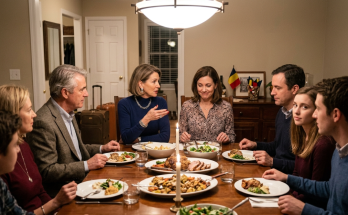
The table before me was a grotesque display of culinary excess.
Platters groaned under the weight of thick,
charred ribeyes,
glistening garlic-butter prawns,
wedges of imported Truffle Pecorino,
and sweating bottles of vintage Barolo.
Theresa had orchestrated this feast specifically to venerate
the birthday of her undisputed favorite daughter-in-law, Lauren.
My name is Mariana.
I am thirty-seven years old,
the founder of a mid-sized commercial logistics firm,
and for four agonizing years,
I had been shackled by marriage to Daniel,
Theresa’s youngest son.
I sank into the velvet-upholstered chair beside my husband, the arches of my feet throbbing from a day spent touring concrete warehouses. I expected a glance. A nod. Even a transactional greeting.
Daniel didn’t bother to lift his eyes from his plate.
“You’re late,” he mumbled, sawing aggressively into a slab of bleeding meat.
Ignoring him, Theresa speared the most tender cut of beef, heaped a serving of prawns beside it, and gingerly placed the towering portion in front of Lauren. “Eat up, sweetie,” she cooed, her voice dripping with artificial saccharine. “At least you know how to spoil this family. You bring a certain elegance to our table.”
Lauren’s face illuminated like a casino slot machine paying out a jackpot. “Oh, Mom, you’re always so incredibly generous to me.”
Across the table, Lauren’s husband—Daniel’s older brother, Aaron—let out a booming, arrogant laugh, swirling his wine glass. “That’s because my wife has inherent class. Not everyone possesses the pedigree to understand how to live well.”
I sat perfectly still. The silence wrapping around me was dense and suffocating.
Not a single soul in that dining room seemed to recall the glaring, undeniable reality of their existence: for the past thirty-six months, the invisible engine powering every ounce of their “living well” was my bank account.
The mortgage on Theresa’s sprawling, outdated suburban estate: three thousand, two hundred dollars, automatically deducted from my checking account on the first of every month. The utility bills, the landscaping, the pool maintenance: roughly another thousand. Daniel’s platinum credit card, perpetually hovering near its maximum limit: anywhere from eighteen hundred to two and a half thousand dollars, seamlessly paid off by me to protect his abysmal credit score.
When Theresa underwent emergency gallbladder surgery and her premium insurance lapsed, I absorbed the hospital debt. When Aaron was unceremoniously fired from his mid-level marketing job, I quietly covered two months of his SUV lease to spare Lauren the “embarrassment” of a repossession.
I had bled myself dry for these people because Daniel possessed a masterful, manipulative script. We’re family, Mari, he would whisper in the dark, stroking my hair. Family is an ecosystem. You take care of the roots, the tree provides shade. Someday, if we stumble, they’d do the exact same for us.
Staring down at the glossy surface of that empty porcelain plate, the illusion shattered. A cold, surgical clarity washed over my brain. They would never do the same for me. They would watch me drown and complain about the splashes.
I shifted my gaze from the plate to Daniel. I waited. A desperate, foolish part of me waited for the man I had married to drop his fork. To slam his fist on the table. To demand why his mother could casually drop eight hundred dollars on a birthday dinner for Lauren, yet treat his wife like a stray mongrel begging for scraps.
Daniel just kept chewing. A dribble of garlic butter caught in the corner of his mouth.
“Mom’s just being herself,” he hissed under his breath, his eyes violently avoiding mine. “Just drink some water and don’t make a scene. You’re embarrassing me.”
That pathetic, cowardly whisper did not break my heart. It incinerated it.
I placed my linen napkin on the table and stood up. The legs of my chair scraped harshly against the hardwood floor. “All right.”
Theresa paused, a forkful of salad hovering near her mouth, an elegant eyebrow arching in mock surprise. “Are you seriously throwing a tantrum? Are you offended?”
“No,” I replied, my voice devoid of any tremor, cold as deep winter. “I’m not offended at all, Theresa. I just finally understand the math.”
I reached for my leather trench coat and hoisted my briefcase onto my shoulder. As I turned, Lauren let out a high-pitched, muffled giggle, leaning into Aaron’s shoulder.
“See?” Lauren whispered, loud enough to ensure it echoed. “Some people can buy their way into a room, but they still have zero manners for polite company.”
I stopped. I looked dead into Lauren’s smug, over-contoured face for three agonizing seconds. I committed the arrogance in her eyes to memory. Then, without a single word, I turned on my heel and walked out the front door.
I climbed into my car, the leather seats freezing against my back, and drove straight to my sanctuary—a sleek, high-rise condo downtown. It was a property I had purchased years before Daniel ever murmured my name, paid off entirely through late nights, missed holidays, and relentless grit.
I didn’t shed a single tear on the drive. I didn’t scream at the steering wheel. Instead, when I walked through my front door and the electronic lock engaged behind me, I dropped my briefcase, pulled out my phone, and opened my encrypted banking application.
Theresa’s mortgage: Auto-pay active.
Utility bills: Auto-pay active.
Daniel’s credit card: Auto-pay active.
Monthly allowance transfer to my mother-in-law’s checking account: Auto-pay active.
My thumb hovered over the glowing screen. One by one, with the clinical precision of a surgeon amputating necrotic limbs, I canceled every single recurring transfer.
But severing the digital lifelines was only the first step. As I watched the confirmation screens flash green, a dark, unsettling thought coiled in the back of my mind. If my money had been funding their lavish lifestyle for years, why was Daniel always so desperate for more? Where was the rest of the cash bleeding out?
Chapter 2: The Severance
“Robert,” I said, bypassing the usual pleasantries the moment he answered. “I need you at the office by seven tomorrow morning. We are executing a complete financial hard-stop on my personal accounts.”
There was a shuffle of papers on the other end. “Robert Hayes was a man who lived for spreadsheets, and he immediately caught the gravity in my tone. “A hard-stop? Mariana, are we talking about the auxiliary accounts or the primary?”
“All of them. Starting at dawn, I want you to meticulously eliminate every single personal payment, wire, or linked card tied to Daniel or his family.”
“All of them?” Robert repeated, a rare note of hesitation in his voice. “Mariana, the property taxes on his mother’s estate are queued for disbursement on Thursday.”
I stared through the floor-to-ceiling glass of my living room, watching the taillights bleed into the Toronto night. “Kill the disbursement. The bank can deal with her.”
“Understood.”
I slept that night with a profound, dreamless intensity I hadn’t experienced in half a decade. When my eyes snapped open at 6:00 AM, the knot of chronic anxiety that usually sat heavy in my sternum had evaporated.
At exactly 8:17 AM, as I was taking the first scalding sip of my espresso in my office, my cell phone vibrated violently against the glass desk. The caller ID flashed Theresa’s name.
I let it ring three times before swiping the green icon.
“Mariana!” Theresa’s voice was a hysterical, ragged shriek, entirely stripped of its usual aristocratic pretense. “What the hell is going on? The branch manager just called me! He said the house payment bounced due to insufficient funds! You need to log in and transfer the thirty-two hundred dollars right this second before they flag my account!”
I leaned back in my ergonomic leather chair. I took another slow, deliberate sip of my coffee, savoring the bitter roast.
“I’m sorry, Theresa,” I said, perfectly mirroring the cadence she had used the night before. “My budget for you ran out.”
The dead, horrified silence on the other end of the line was a symphony. It was absolute, unadulterated bliss. I could practically hear the gears in her brain grinding to a halt as the reality of her vulnerability crashed into her ego.
Before she could formulate a defense, I ended the call and blocked her number.
Thirty minutes later, Robert knocked softly on my office door, carrying a thick manila folder. His face was unusually grim.
“The severance is complete. All auto-pays are dead, and the linked cards have been reported as compromised and frozen,” he reported, taking a seat across from me. “But Mariana… while I was uncoupling the accounts, I ran a routine diagnostic on the commercial operating funds for your logistics firm.”
A cold dread coiled in my gut. “And?”
Robert slid a printed ledger across the desk. “I think you need to look at this. Canceling their allowance is just the surface. Someone has been draining this family from the inside, and they’ve been doing it with a terrifying level of sophistication.”
I looked down at the ledger, my eyes scanning the highlighted anomalies, realizing with sickening clarity that the monster in my marriage wasn’t just my mother-in-law.
Chapter 3: The Ambush
“You have a legal and moral obligation to help my mother!”
Daniel’s voice echoed off the high ceilings of my condo later that evening. He had bypassed the concierge and barged through my front door, his face flushed a violent shade of crimson, his tie loosened defensively.
I was sitting calmly at my dining table, reviewing the documents Robert had unearthed. I closed my laptop with a soft, definitive click.
“No, Daniel,” I corrected him, my voice dangerously level. “For four years, I chose to help her. I allowed myself to be used. There is a massive, legally binding difference between charity and obligation.”
“Her mortgage payment is past due!” he screamed, slamming a hand against the wall. “The bank is threatening to initiate pre-foreclosure proceedings if the arrears aren’t cleared by Friday!”
“Then I suggest you, Aaron, and the impeccably classy Lauren pool your resources and pay it.”
Daniel ran both hands through his hair, pacing the floor like a trapped animal. “You know damn well my salary can’t cover a three-thousand-dollar nut! I’m an entry-level analyst!”
“Interesting,” I noted, tilting my head. “Because when your mother humiliated me at her dining table forty-eight hours ago, your family certainly seemed to possess the liquid capital for a four-figure, catered feast. Wagyu beef doesn’t pay for itself.”
“It was just a dinner!” he pleaded, his anger fracturing into desperation. “She was just being petty! You know how she gets!”
“And my empty plate was ‘just a plate,’ right?”
Daniel went completely quiet. The air in the room grew heavy, suffocating him. He looked at me, searching for the soft, compliant woman he thought he had married. He found only granite.
From the leather portfolio resting beside my laptop, I pulled out a thick, heavy-stock folder. It was a file I had meticulously prepared that afternoon with my attorney and oldest college friend, Paula. I slid it across the glass surface of the table until it rested at the edge, closest to him.
“I need you to pack whatever fits into two suitcases and leave the premises,” I ordered. “Building security has already deactivated your fob. If you aren’t gone in twenty minutes, I will have you removed for trespassing.”
Daniel’s eyes darted from my face to the folder. His hands shook as he flipped open the heavy cover. The color violently drained from his face, leaving him looking like a corpse.
“Divorce?” he choked out, the word scraping against his throat.
“Yes.”
“Over… over a dinner? Because my mom was rude to you at a party?”
“Over four years of you mistaking the role of a husband for the role of a parasite. Over four years of you sitting silently, chewing your expensive steak, while you let your mother treat me like a human ATM.”
He tried to argue. He tried to cry. He tried to invoke the sacredness of our vows. But I simply picked up my phone and dialed the front desk. Five minutes later, two burly security guards were standing in my foyer, watching Daniel shove his designer suits into a duffel bag.
He retreated to the only place he had left: his mother’s sprawling, unfunded estate. But he was walking into a warzone.
According to Paula’s private investigator, who had been parked across the street conducting an asset check for the divorce filings, the chaos at Theresa’s house erupted the following afternoon.
Theresa, still fuming from my financial blockade, had summoned a family meeting in her opulent living room. “We don’t need Mariana anyway,” she had declared to Aaron, Daniel, and Lauren, sipping a glass of cheap wine. “Lauren is always telling us how phenomenally well her offshore investments are doing. Lauren, darling, we just need a bridge loan for a few months until I figure out the estate.”
Everyone had turned toward the golden child, the favorite daughter-in-law.
Lauren had instantly gone the color of spoiled milk. “Uh… my funds are entirely tied up in my portfolio this month,” she stammered, backing toward the hallway.
Aaron frowned, his brow furrowing in confusion. “Tied up in what portfolio? The crypto venture?”
“In… a restricted business venture. There are heavy penalties for early withdrawal.”
“What venture, Lauren? Show me the app.”
Before she could invent another desperate fiction, the heavy brass knocker on Theresa’s front door echoed through the house.
It wasn’t a neighbor dropping off a casserole. It was two men in sharp, cheap suits—representatives from a high-risk recovery firm—accompanied by a grim-faced process server. They weren’t there for a friendly chat. They were holding official, court-stamped legal documentation regarding several major, high-yield personal loans Theresa claimed she had never, ever taken out.
But the signatures on the dotted lines were about to blow the family’s darkest secret wide open.
Chapter 4: The Golden Child’s Fall
The lead representative, a man with a bulldog jaw and no patience, dropped a thick, plastic-bound dossier onto Theresa’s glass coffee table.
“Mrs. Theresa Ramirez,” he stated, his voice devoid of empathy. “We are here to formally verify these signed credit agreements and initiate the asset seizure protocol.”
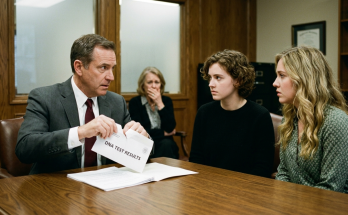
Theresa, her hands trembling violently, flipped through the dense legal jargon. Her face transformed from pale to ghost white. Listed on the pages were high-interest loans, predatory lines of credit, and payday advances totaling nearly eighty thousand dollars. There were digital contracts, photocopies of her driver’s license, and records of balance transfers made through accounts linked directly to her primary banking profile.
“This is impossible,” Theresa gasped, clutching her chest. “I never applied for these! This is a mistake. A massive clerical error!”
The agent tapped a blunt finger against a digital signature log. “These applications were not errors, ma’am. They were completed using your primary credentials, your personal social security number, and two-factor verification codes sent directly to your home IP address.”
Aaron slowly pivoted his gaze toward his wife. Lauren was shaking uncontrollably, her manicured nails digging into the palms of her hands, drawing blood.
“Lauren…” Aaron demanded, the arrogance completely stripped from his voice, replaced by a hollow terror. “What did you do?”
She shook her head violently, tears welling up, smearing her expensive mascara. But the charade was over. Theresa turned the page of the dossier and spotted a photograph attached to an in-person ID verification form. It was a grainy but undeniable security snapshot of Lauren standing at the teller window of a local financial center, picking up certified loan documents.
“Explain this to me. Right now,” Theresa ordered, her voice vibrating with a lethal, terrifying rage.
The woman who had spent months parading around with imported designer bags, boasting about luxury Mediterranean vacations, and turning her nose up at my working-class roots, broke down sobbing on the Persian rug.
There were no offshore investments. There was no portfolio. Even the luxury Range Rover she drove was heavily leveraged under fraudulent terms. Lauren had sustained her glamorous, aristocratic illusion entirely through toxic, high-interest personal loans. And she had secured them by systematically stealing Theresa’s identity—weaponizing the fact that her mother-in-law trusted her so implicitly that she allowed Lauren to handle her mail, organize her taxes, and manage her financial passwords.
“I just wanted to fit in!” Lauren wailed, gasping for air. “I just wanted you guys to see that I could contribute too! That I was worthy of this family!”
Theresa collapsed backward into her armchair, the wind completely knocked out of her. The woman she had elevated to a pedestal, the “perfect daughter-in-law,” had secretly saddled her with tens of thousands of dollars in ruinous, criminal debt. Meanwhile, the woman she had handed an empty plate had been quietly, diligently keeping the wolves from the door.
Yet, the carnage of that revelation was merely the appetizer.
The next morning, Daniel bypassed my condo and showed up directly at the reception desk of Aegis Logistics. He looked feral. His clothes were wrinkled, his eyes bloodshot, smelling of stale alcohol and desperation.
He burst into my private office, ignoring my assistant’s protests. “Mariana, please. Please, you have to listen to me.”
Paula, my attorney, was already sitting across from my desk, reviewing contracts. She wore a sharp charcoal suit and a smile that could slice glass.
“Lauren completely ruined my mother,” Daniel babbled, bracing his hands on my desk. “Mom has debt collectors coming at her from every direction. The house is going to be seized. I know you’re furious, but you have to help me save the estate. I’ll do anything. I’ll sign whatever post-nup you want.”
Paula slowly uncrossed her legs. She reached into her leather briefcase and slid a fresh, pristine set of documents across the polished wood of my desk.
“Before you ask my client for another single dime, Daniel,” Paula purred, her tone lethal, “I strongly suggest you review Exhibit A.”
Daniel blinked, confused, and picked up the pages. “What is this?”
“It means,” Paula said, leaning forward, “that Lauren’s little bout of identity theft isn’t the most catastrophic fraud occurring within your bloodline.”
I looked my husband dead in the eye, feeling nothing but a glacial void where my love used to be. “Daniel, for the past forty-eight hours, Robert and my legal team have been conducting a forensic audit of every transaction that left my commercial accounts over the past two years.”
He slowly raised his head. The desperation in his eyes morphed into sheer, unadulterated terror. “What… what are you saying?”
I pushed a stack of printed wire transfer receipts toward him. They detailed systematic, recurring transfers to an offshore digital wallet I had never authorized—all authenticated from a device registered to his personal IP address.
Daniel froze, a statue of guilt, realizing the trap hadn’t just snapped shut on his mother. It was closing around his own throat.
Chapter 5: The Parasite
“Mariana, I can explain,” Daniel pleaded, his voice cracking into a pathetic, high-pitched whine.
I had been absorbing that exact phrase for years. People only ever say I can explain when they are caught absolutely red-handed, drenched in blood, and have completely exhausted their inventory of lies.
Paula didn’t let him breathe. She stood up, walked around the desk, and pointed a manicured finger directly at the highlighted line items.
“For nearly eighteen months,” Paula detailed, her voice ringing like a judge pronouncing a sentence, “you have been quietly funneling localized sums out of Aegis Logistics’ secondary operating account. You kept the amounts meticulously small to avoid triggering automated corporate fraud alerts. Four hundred dollars here. Eight hundred there. Occasional spikes of fifteen hundred.”
She flipped the page. “You disguised the memos as routine vendor fees. Elite Cleaning Services. HVAC Maintenance. Q3 Office Supplies. But the routing numbers trace directly back to a secondary checking account in your name.”
In total, the man I shared a bed with had siphoned over twenty-five thousand dollars from the company I had built with my own blood and sweat.
“I didn’t view it as stealing!” Daniel stammered, backing away from the desk as if the papers were radioactive.
I stared at him in utter, horrifying disbelief. “Then what, in the name of God, do you call extracting capital from my corporate account without my knowledge or consent?”
“I was supporting my family!” he cried out, tears of self-pity finally spilling over his cheeks. “Mom had so many hidden expenses! Aaron was always begging me for cash to keep Lauren happy! I just… I didn’t want it to look like you were the only successful one in the marriage! I needed to be the man of the house!”
“With my money!” I roared, the anger finally breaking through my icy exterior.
“You’re my wife! What’s yours is supposed to be mine!”
“Exactly,” I replied, my voice dropping back down to a chilling, deadly calm. “I was your partner. Your equal. I was not a vault you had permission to crack whenever your fragile ego demanded inflation.”
Daniel slumped into one of the guest chairs and buried his face in his hands, sobbing openly. For the first time since the day I met him, I didn’t feel a singular shred of sympathy. I didn’t want to comfort him. I just felt a profound, heavy exhaustion dragging at my bones.
“I just didn’t want to feel small around them,” Daniel whimpered into his palms.
And there it was. The absolute, unvarnished, ugly truth, stripped of all its decorative pretense.
They didn’t just desire my financial support; they actively resented the fact that it came from me. They required my wealth to sustain their aristocratic delusions, but their fragile, toxic pride couldn’t stomach the reality that a woman they viewed as socially inferior was the only thing keeping them from the gutter.
That was why Theresa bragged endlessly about Lauren’s imaginary investments. That was why Aaron constantly belittled my work schedule. That was why Daniel allowed everyone to believe he was a financial titan while earning an entry-level wage. My grueling labor was funding a pathetic, theatrical charade they designed specifically to make me feel small.
I leaned forward, resting my elbows on the desk. “And the empty plate?” I asked softly. “Was that part of protecting the family image, too?”
Daniel dropped his hands. He couldn’t meet my gaze. He stared at the carpet. “Mom was furious.”
“Furious about what?”
“Because you refused to pay for her trip to the Sedona wellness resort last month. She felt disrespected.”
I sat back in my chair, struck by the sheer audacity of it. I hadn’t even connected the dots.
Two weeks prior, Theresa had cornered me in my kitchen and demanded thirty-five hundred dollars to fund a girls’ trip to a luxury spa. I had told her no, calmly explaining that I had just reinvested a massive chunk of liquid capital into upgrading our fleet of logistics vehicles.
The birthday dinner hadn’t been a random act of spite. It was a highly calculated punishment. Theresa wanted to send a definitive message to the rest of the table: if Mariana didn’t obediently fund every single one of my whims, she didn’t deserve a seat at the feast.
The empty plate wasn’t just a petty, mean-girl insult. It was a mafia-style ultimatum. Pay the toll, or starve.
“Get out, Daniel,” I whispered.
“Mari, please, I love you—”
“Get out of my office before I call the police.”
He scrambled to his feet, wiping his nose on his sleeve. He looked at Paula, terrified. “Are you… are you going to press criminal charges for the company money?”
Paula smiled—a terrifying, predatory expression. “That depends entirely on your total and complete cooperation with the divorce settlement, and your adherence to the financial restitution agreement I am currently drafting. If you fight us on a single comma, I will have you arrested for corporate embezzlement by Friday afternoon.”
Daniel walked out of the glass doors looking utterly, profoundly broken. Not because he had lost the love of his life—his narcissism prevented him from grasping the emotional weight of that loss—but because he had just realized his safety net had been set on fire, and he was in freefall.
The aftermath for Theresa’s family was a swift, unyielding avalanche. Without my monthly capital infusions, Theresa collided violently with the harsh reality she had spent a decade avoiding: she could not afford the air she breathed. The mortgage defaulted. The property taxes triggered liens. Her personal credit cards, maxed out to their limits, began going to collections.
Worse, she was now facing secondary liability for the fraudulent loans Lauren had procured.
Aaron, terrified of being implicated in federal fraud, turned on his wife immediately, demanding a full accounting. Lauren’s web of lies unraveled entirely under the scrutiny of bankruptcy lawyers. Her designer bags were seized. Her lavish dinners had been charged to predatory credit lines she had no hope of repaying. Even the expensive catering for the very birthday party where I was humiliated had been purchased on stolen credit.
Aaron filed for separation to protect his own meager assets. Theresa, backed into a corner by the recovery firm, was forced to file a formal police report regarding the identity theft. The subsequent investigation brought criminal fraud charges raining down on Lauren.
I didn’t celebrate their downfall. I didn’t pop champagne. I didn’t need to watch them suffer; I just needed to ensure I wasn’t collateral damage in their explosion.
I thought I was entirely done with them, until three weeks later, when the receptionist buzzed my intercom to announce an unexpected visitor waiting in the lobby.
Chapter 6: The Beggar Queen
Theresa was standing near the elevators when I walked out of my office.
She was unrecognizable. She wasn’t draped in her usual cashmere shawls or dripping in designer jewelry. She wasn’t wearing the oversized sunglasses she usually wielded like a crown to shield herself from the peasants. She wore a simple beige trench coat, looking frail, hollowed out, and at least ten years older than her actual age.
Paula stepped out of her office, narrowing her eyes. She leaned in close to me. “Do you want me to have building security escort her out to the curb?”
I paused, studying the defeated posture of the woman who had tormented me for years. “No,” I said quietly. “Let her in.”
Theresa walked into my office with a slow, hesitant shuffle and took the guest seat across from my desk. For the first time since the day Daniel introduced us, she didn’t open her mouth to issue a demand, a critique, or a passive-aggressive insult about my clothing.
She just looked at her hands.
“Mariana… we had to sell the cars,” she said softly, her voice raspy.
I said nothing. I let the silence hang heavy in the room.
“And some of my grandmother’s jewelry.”
Still, I remained silent, my face an unreadable mask.
“Aaron is moving into a microscopic apartment across town,” she continued, a tremor shaking her shoulders. “And the bank… the bank isn’t waiting. I’m putting the estate on the market tomorrow morning before they foreclose.”
“That sounds like a highly practical decision,” I replied evenly.
Her lower lip quivered. She looked up at me, her eyes bloodshot and brimming with moisture. “The bank offered a predatory repayment plan, but I can’t afford the monthly minimums. The truth is… I could never afford that house. Not since my husband died.”
That admission surprised me. It was the first honest sentence I had ever heard her speak.
Theresa took a deep, shaky breath, fighting for composure. “For years, I assumed that as long as Daniel was married to you, the well would never run dry. I thought you were just… an endless resource. I thought we would never have to worry about the math.”
“And that was the fundamental rot at the core of our relationship, Theresa.”
She nodded slowly, a tear finally escaping and tracking down her wrinkled cheek. “I know.”
She reached into her battered leather purse and pulled out a piece of glossy photo paper. It was a picture taken on someone’s smartphone the night of the birthday dinner, printed out. Everyone was gathered around the table—Lauren flashing a brilliant, fake smile; Aaron raising a glass of expensive wine; Daniel looking nervously away from the lens.
And me. Sitting in the corner, isolated, staring down at a completely bare, white porcelain plate.
Theresa slid the photo across the wood until it rested in front of me. “When I looked at this picture last night, while packing up my living room… I finally saw the monster I had become.”
More tears spilled over, dropping onto her lap. “You paid the roof over my head. You kept the lights on. When I was lying in that hospital bed, terrified I was dying, you covered the deductible out of your own pocket so I wouldn’t stress. And I took you, chewed you up, and cast you aside for a woman who just told me what my ego desperately wanted to hear.”
I listened, my breathing steady, refusing to interrupt her penance.
“I’m not here to beg you to stop the divorce,” she whispered, her voice breaking. “And I swear to God, I’m not asking you for a check. I know that bridge is burned to ash.”
She swallowed hard, gripping the armrests of the chair. “I came here because I need to ask for your forgiveness.”
For four years, I had laid awake at night imagining what it would feel like to force an apology from this woman’s lips. I thought it would feel like triumph. I thought it would feel like victory. Yet sitting there, facing a broken, terrified woman stripped of her delusions, I felt no surge of vindictive joy. I only felt a profound, sweeping sense of closure.
“I accept your apology, Theresa,” I said firmly, ensuring my voice didn’t waver. “But understand this: forgiveness does not mean amnesia. It doesn’t mean I’m coming back to the table. It doesn’t mean I’m going to bail you out of this debt, and it certainly doesn’t mean I’m dropping the restitution claim against your son.”
She closed her eyes, exhaling a long, ragged breath, and nodded slowly. “I understand. You have to protect yourself.”
Before she stood up to leave, she placed her hand on the photograph one last time, her fingers brushing over the image of the empty plate. “I will regret doing that to you for the rest of my miserable life.”
“So will I,” I said, meeting her gaze with absolute clarity. “But for very, very different reasons.”
As she walked out of the glass doors, her silhouette shrinking down the hallway, I realized the hardest part wasn’t cutting them off. The hardest part was about to come—figuring out who I was now that I wasn’t carrying their world on my shoulders.
Chapter 7: The Feast
The divorce proceedings were surgically efficient. With Paula operating as my legal vanguard, there were no dramatic courtroom theatrics. The financial documentation was bulletproof: my condo was purchased years prior to the marriage, Aegis Logistics was entirely my separate corporate property, and Daniel’s stolen funds were formally, legally accounted for as embezzlement.
Facing overwhelming, indisputable evidence of civil conversion and corporate theft, Daniel’s cheap lawyer advised him to surrender. He agreed to a brutal, structured restitution agreement to avoid the inside of a prison cell.
The afternoon we signed the final decree in the mediator’s office, Daniel looked like an empty shell. He had lost fifteen pounds. He was driving a ten-year-old compact car with a dented bumper, and he was working double shifts at a logistics warehouse—ironically, a competitor of mine—to cover his basic living expenses and his monthly restitution payments to my firm.
He sat across the polished conference table, staring blankly at the pen in his hand. “I really thought you’d always be there, Mari. No matter what.”
“I know you did, Daniel,” I replied, signing my name with a flourish. “And that entitlement was your fatal flaw.”
He rubbed his exhausted eyes. “I ruined the best thing that ever happened to me. It was the biggest mistake of my life.”
“It wasn’t a mistake,” I corrected him, standing up and buttoning my blazer. “A mistake is forgetting to pay the water bill. What you did was a series of conscious, deliberate choices made every single day. You chose to exploit my kindness while actively ignoring my worth.”
He didn’t mount a defense. He couldn’t. He signed his name on the dotted line, stood up, and walked out of the room, out of my life, forever.
Over the next twelve months, without the anchor of the Ramirez family dragging down my finances and my mental health, Aegis Logistics expanded with explosive momentum. We opened a second regional office in Vancouver and doubled our administrative staff. Paula officially left her firm to join me as my full-time Chief Legal Officer.
I learned a skill far more valuable than scaling a supply chain: I learned how to aggressively enforce boundaries without feeling a microscopic ounce of guilt.
I heard through the grapevine of mutual acquaintances that Theresa eventually sold her estate to a developer, paid off the primary mortgage lender, and used the meager scraps that remained to rent a modest one-bedroom apartment in a less desirable zip code. For the first time in her adult life, she was forced to live strictly within the confines of her reality.
Aaron worked grueling hours to stabilize his shattered credit following his bitter divorce from Lauren. Lauren herself was sentenced to three years of probation and court-ordered financial restitution for the identity theft and bank fraud.
Daniel paid his monthly restitution check to my accounting department on time, every single month. We never spoke a word outside of automated email receipts.
Exactly one year after the judge stamped my divorce papers, Aegis Logistics celebrated its tenth corporate anniversary. I booked the private dining room at L’Aura, a top-tier, Michelin-starred restaurant downtown. My executive team, my closest friends, and my father were all in attendance, the room buzzing with laughter and the clinking of crystal.
Paula sat to my right, looking radiant in a sapphire dress. My father sat to my left, beaming with pride.
Just before the culinary team began serving the main course, a waiter in a crisp white jacket approached our end of the table. With practiced elegance, he leaned down and placed a polished, gleaming, entirely empty white porcelain plate directly in front of me.
For a fraction of a second, the ambient noise in the room faded. My chest tightened. A ghost of adrenaline spiked in my blood. The plate was almost identical in shape and color to the one Theresa had shoved at me that fateful night.
Paula, attuned to my every mood, noticed my sudden rigidity immediately. She placed a hand on my wrist. “Mariana? Are you okay? Do you need a minute?”
I looked down at the gleaming porcelain, the overhead chandelier reflecting in its pristine surface. Then, I slowly looked around the room.
I looked at my father, who had worked two jobs to put me through college. I looked at Paula, who had fought like a gladiator to protect my assets. I looked at my team, who respected my leadership.
No one in this room was mocking me. No one was subtly demanding my money. No one was measuring my fundamental human value by what I could purchase for them.
The waiter returned a moment later, holding a silver cloche. He lifted it with a flourish, expertly sliding a beautifully prepared, aromatic dish of seared halibut and saffron risotto onto the empty plate.
I looked at the food, then looked at Paula, and I laughed out loud—a bright, genuine, entirely unburdened laugh that echoed off the walls.
“I’m perfectly fine, Paula,” I smiled, picking up my fork. “Never better.”
My father stood up, tapping his knife against his champagne flute. “To my daughter,” he announced, his voice thick with emotion. “To her unyielding strength, her brilliant mind, and her continued success.”
Everyone at the long table raised their glasses in unison, the crystal chiming like bells.
“What exactly are we drinking to tonight, boss?” Robert called out from the end of the table with a grin.
Paula smiled, turning to me and clinking her flute against mine. “We are drinking to the realization that setting boundaries is the ultimate, purest act of self-respect.”
Those words resonated deep within the marrow of my bones.
For a long time, I genuinely believed the night of the birthday dinner was the most humiliating, degrading moment of my existence. Now, sitting in the glow of a life I had reclaimed, I recognized it for what it truly was: the greatest, most necessary gift I had ever been given.
I needed to see that plate completely, starkly empty to finally realize how much of my own soul I was pouring into a void that had no bottom. If I paid one astronomical bill, another miraculously appeared. If I solved one manufactured crisis, they invented a new, desperate need. If I bled for them ten times, and finally found the courage to say no on the eleventh, they branded me a selfish villain.
They weren’t a family. They were a sophisticated extraction operation, built on a foundation of entitlement and fueled by emotional manipulation.
Theresa lost a mansion she could never genuinely afford. Lauren lost a glamorous fantasy built on stolen credit and lies. Daniel lost a devoted marriage because he mistook my deep generosity for pathetic weakness.
And I lost something, too.
I lost the desperate, suffocating need to please people who were utterly incapable of valuing me. It was the most liberating, intoxicating loss of my entire life.
Justice isn’t always about orchestrating revenge. It isn’t always about watching the people who harmed you burn to the ground. Sometimes, true justice is simply stepping out of the way, removing your protective hands, and letting them face the terrifying, natural consequences of their own choices.
I didn’t ruin Daniel’s family; I simply stopped funding their collective illusion. I didn’t take Theresa’s sprawling house away; I stopped paying for a lifestyle she hadn’t earned. And I didn’t ruthlessly abandon my husband; he abandoned our marriage every single time he chose to sit quietly, chewing his food, while his bloodline treated his wife like trash.
That cold night in November, I walked out of my mother-in-law’s front door with an empty stomach. But I walked away with something infinitely more valuable: my complete, unshakeable dignity.
When colleagues or friends ask me when my life and my business truly turned a corner, I don’t talk about the messy divorce, the sharp lawyers, or my company’s explosive revenue metrics.
I tell them a story about a dining table piled dangerously high with expensive food. I tell them about a family laughing at my expense, a mother-in-law who arrogantly thought she could humiliate me into financial submission, a cowardly husband who couldn’t even meet my eyes, and a single, empty white plate.
Theresa tried to use that porcelain plate to remind me that I didn’t belong at her high-society table.
She had absolutely no idea she was actually giving me the exact, violent push I needed to stand up, walk away, and build a table of my own.